Holding Space for Those Who Hold Others
Strengthening Guidance and Counselling Systems in Schools
Every day, educators hold space for learners navigating academic, social, and emotional challenges. Yet rarely do they have the opportunity to pause and reflect on their own wellbeing.
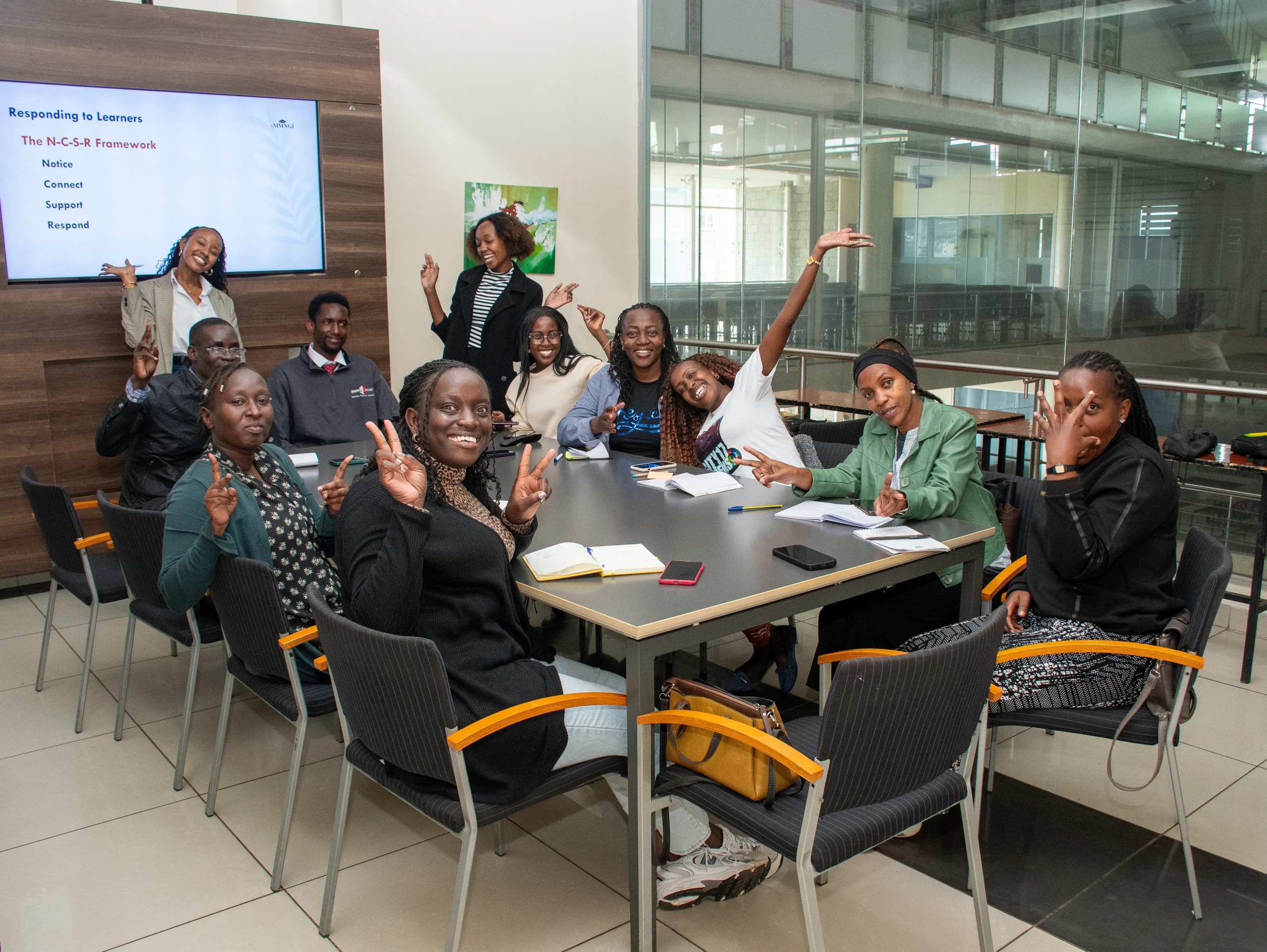
On 31 May 2026, eMsingi’s Psychosocial Support Pillar brought together the Guidance and Counselling Department of Raila Educational Centre at Strathmore University for a capacity-building workshop themed “Holding Space for Self and Building Functional Guidance and Counselling Systems in Schools.” The session explored a fundamental principle of effective learner support: educators must first learn to care for themselves before they can sustainably care for others.
Across schools, guidance and counselling departments are increasingly called upon to respond to complex learner needs. From academic pressures and family challenges to mental health concerns and behavioural issues, educators frequently find themselves at the centre of conversations that require emotional presence, empathy, and resilience. Yet while schools invest significant effort in supporting learners, the wellbeing of those providing that support is often left unattended.
The workshop challenged participants to reconsider this imbalance.
At the heart of the session was a simple but powerful message: educators are human beings before they are professionals. Every day, they carry the emotional realities of their students while navigating their own personal and professional responsibilities. Recognizing and responding to this emotional load is not a sign of weakness; it is an essential part of sustainable learner support.
Participants explored practical approaches to emotional regulation and self-awareness, learning how to identify signs of stress, emotional fatigue, and psychological overload. Through guided reflection, they examined how self-awareness creates the foundation for healthier responses to challenging situations in schools.
A key highlight was the introduction of the PAUSE framework, a practical tool designed to help educators regulate emotions and respond thoughtfully during moments of heightened stress. Rather than reacting impulsively to difficult situations, participants were encouraged to pause, acknowledge their emotional state, understand the source of their activation, self-regulate, and intentionally choose their next course of action.
The session also encouraged participants to think beyond crisis response. Too often, guidance and counselling departments become reactive structures that only engage when problems arise. The workshop challenged educators to shift toward preventative approaches that build resilience before challenges escalate.
Beyond individual wellbeing, the training focused on strengthening institutional systems.
Educators examined the difference between strategy and planning in school guidance and counselling programmes. While many schools have activities and interventions, effective systems require clear direction, defined priorities, and coordinated implementation. Participants were guided through practical frameworks for analysing existing structures, identifying gaps, assigning responsibilities, and monitoring outcomes within their departments.
Through these conversations, the workshop reinforced that guidance and counselling should not be viewed as a standalone function carried by a few dedicated individuals. Rather, it should be understood as a school-wide commitment that contributes to creating safe, supportive, and nurturing learning environments.
As the session drew to a close, participants were invited to reflect on three important questions:
- What must I intentionally strengthen in myself?
- What kind of presence do I want to become for my learners?
- How can I contribute to building stronger guidance and counselling systems in my school?
These reflections captured the spirit of the workshop. Building effective support systems in schools is not only about structures and policies; it is also about people. It is about educators who are equipped, supported, and empowered to show up consistently for the young people entrusted to their care.
eMsingi commends the educators and leadership of Raila Educational Centre for their commitment to strengthening psychosocial support within their school community. By investing in their own wellbeing and professional growth, they are taking an important step toward creating learning environments where both educators and learners can thrive.
As schools continue to navigate increasingly complex social and emotional realities, it is clear that when we strengthen those who support learners, we strengthen the entire school community.